
How Do You Choose the Right Facial for Your Skin?
Quick Answer
Start with what you want from the appointment, then match it to a facial type, and tell your esthetician about any skin condition, medication, or product reaction before you book. A facial is a cosmetic service, so it shouldn't be treated as a replacement for medical treatment of a condition such as acne or eczema.
Decide what you want: more hydration, fewer clogged pores, smoother texture, or simply an hour of relaxation.
Know your skin and your sensitivities: your skin type, any active breakouts or flare-ups, and any medication or products that have irritated you before.
Match the facial to the goal: a facial with extractions for clogged pores, dermaplaning for rough texture and peach fuzz, or a facial customized to your skin if you have several concerns or aren't sure.
Check what is included and what it costs: ask about extractions, products, appointment length, and the full total.
Plan your aftercare: follow your esthetician's instructions and keep sun protection in your daily routine.
Introduction
A facial menu can read like a menu in another language. Classic, express, dermaplaning: the names tell you very little until someone explains what is included.
The right choice usually comes down to two things: what you want from the appointment, and what your skin can handle that day. Skin type is a useful starting point, but it isn't a fixed label, and it doesn't replace what you know about your own skin.
Because a facial is usually treated as a relaxing appointment, it is easy to book one without asking what is actually included. A few questions beforehand can keep you from paying for a treatment that doesn't suit your skin.
This guide explains what a facial does, how to think about your skin type, which facials suit which goals, what to know about dermaplaning and extractions, what to tell your esthetician, and how to compare your options before you book.
What Does a Facial Actually Do?
A facial usually includes some mix of cleansing, exfoliation, extractions if needed, a mask, and massage, finished with products such as a serum and moisturizer. The exact steps vary from studio to studio and from one facial to the next.
It is also a cosmetic service, not medical treatment. Dermatologists say facial masks can help as a boost alongside your regular routine and treatment plan, but they can't replace treatment for conditions such as eczema or acne. A facial as a whole works the same way. If you have a skin condition, a facial can sit alongside your treatment, but it shouldn't take its place.
How Do You Know Your Skin Type?
The usual labels are dry, oily, combination, sensitive, and acne-prone. Many people are a mix, and your skin can behave differently from one season or product to the next. If you aren't sure, ask your esthetician to start with a skin analysis and to explain what they see and why they recommend a particular facial.
Dermatologist guidance on facial masks gives a useful picture of what different skin tends to need. For dry or sensitive skin, it points to ingredients such as hyaluronic acid, ceramides, glycerin, colloidal oatmeal, and green tea extract. For oily or acne-prone skin, it points to chemical exfoliators such as alpha hydroxy acids and beta hydroxy acids, lightweight moisturizing ingredients, niacinamide, and clay. It also says to avoid fragrance, essential oils, rubbing alcohol, and physical exfoliants such as crushed walnut shells, and to be careful with strong exfoliating ingredients if your skin is sensitive.
That list is written for masks you buy yourself, and a studio's products will differ. It does give you something to ask about. If your skin is sensitive, ask what is in the products your esthetician will use, and say so right away if anything stings or burns during the appointment.
Which Facial Fits Your Goal?
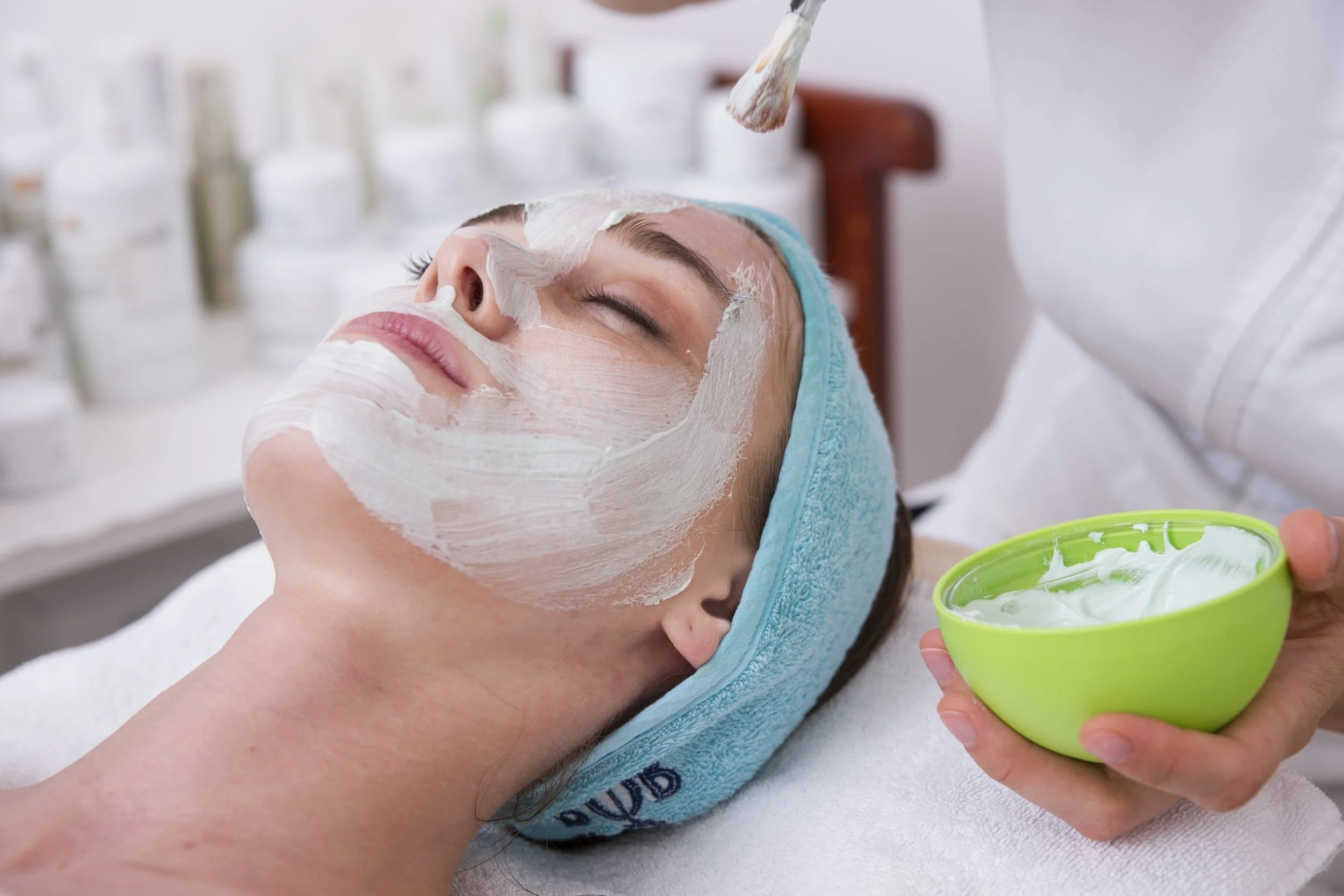
The easiest place to start is with what you want the facial to do. At Blink & Wink, the classic facial with extractions if needed takes 45 minutes, and the dermaplaning facials run from 30 minutes for Express to 50 minutes for Classic. The studio describes its facial service as a multi-step treatment that can include double cleansing, exfoliation, deep hydration, targeted serums and masks, and facial massage.
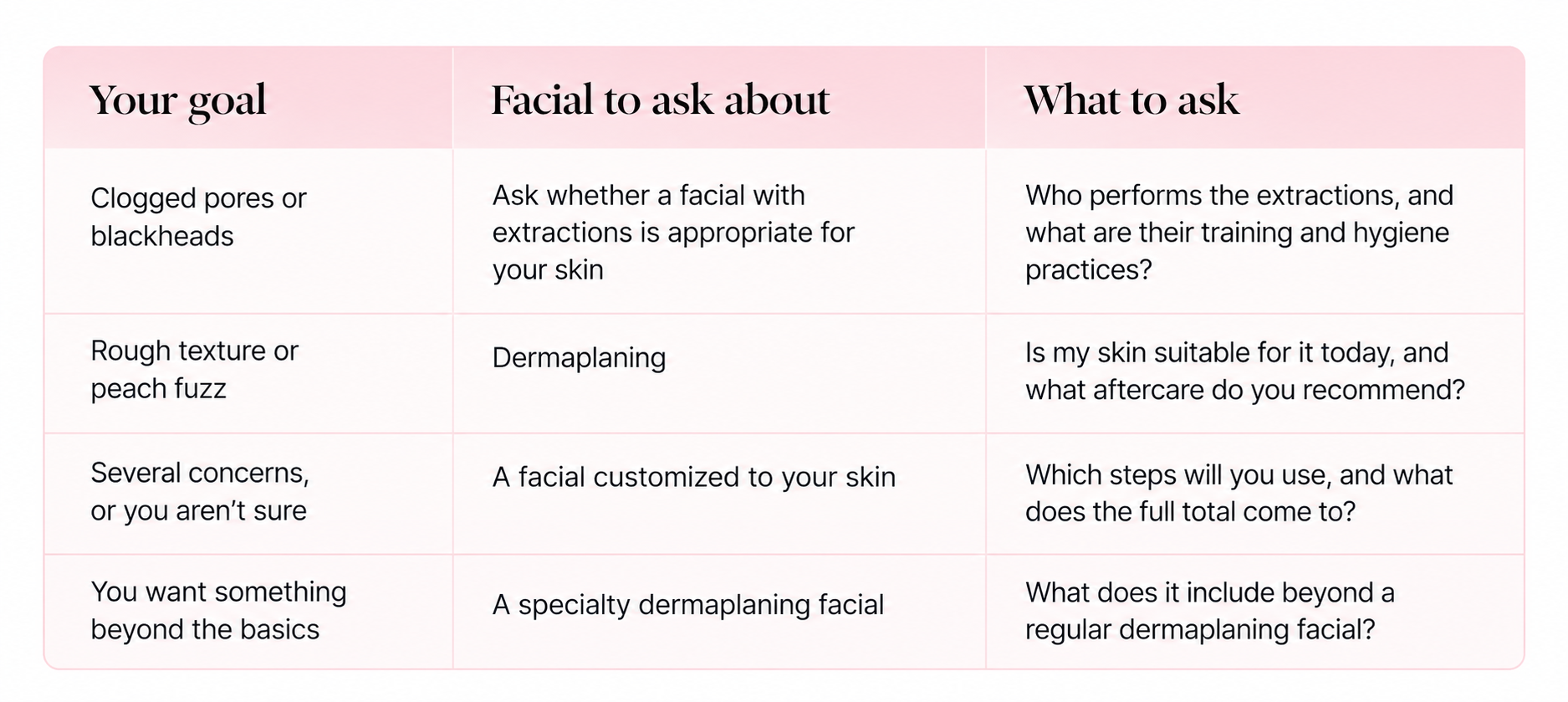
No facial is guaranteed to fix a concern. A good esthetician will tell you what a facial can and can't do for your skin.
What Is Dermaplaning, and Is It Right for You?
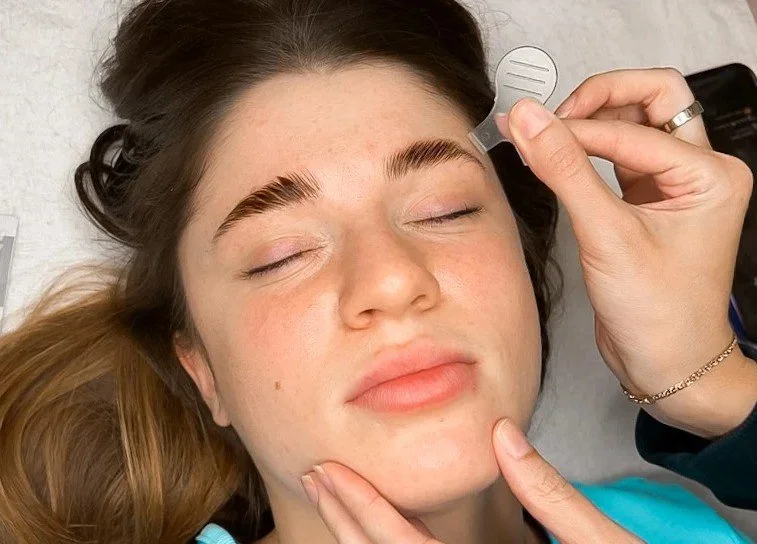
Dermaplaning is a minimally invasive cosmetic procedure that shaves away the top layers of skin, removing dead skin cells and fine facial hair, often called peach fuzz. The hair removal is temporary, because the hair grows back.
It can help skin look smoother and brighter. It doesn't stop the aging process, and it may not reduce the look of deep or raised acne scars. A medical center's health library describes it as generally considered a safe cosmetic procedure, with risks that include infection, scarring, and skin discoloration.
That page describes the procedure as performed by a healthcare provider. A salon's dermaplaning facial may use a different technique, products, or level of treatment, so ask the studio exactly what its service involves. Blink & Wink describes its dermaplaning as using a specialized blade to remove dead skin cells and peach fuzz, and says it suits all skin types except severe acne.
The medical page is stricter on acne. It lists an active case of acne among the reasons to talk to a healthcare provider before dermaplaning, along with cold sore outbreaks, eczema, psoriasis, skin rashes, skin burns, and moles, freckles, skin tags, or other skin growths. If any of those apply to you, tell the esthetician before booking and ask whether you should get medical advice first.
Extractions and Breakouts
Extractions clear out clogged pores such as blackheads and whiteheads, and many facials include them. What matters is who does them and how.
Dermatologists warn that popping pimples yourself can cause permanent acne scars and infection. They add that touching, picking, and popping can worsen acne. Their guidance on extraction describes it being done by a dermatologist using sterilized equipment, and it doesn't address extractions in a salon. If a facial includes extractions, ask who performs them, what training they have, and how the equipment is cleaned.
A facial should not be treated as a replacement for medical acne treatment. If your acne isn't improving despite consistent treatment, or you have deep or painful breakouts, a dermatologist can help work out the right treatment.
What Should You Tell Your Esthetician Before a Facial?
The more your esthetician knows, the better they can choose products and steps for you. Mention:
Any current breakouts, irritation, or flare-ups.
Eczema, psoriasis, rashes, or cold sores.
Sensitive skin, product allergies, or reactions to past facials.
Retinol, acids, or other active skin care products you use. Overlapping irritating exfoliants can make sensitive skin more irritated.
Prescription acne medication, especially one that makes your skin more sensitive or prone to peeling.
Recent waxing, peels, or other skin treatments.
When Should You Ask a Doctor Before a Facial?
Not everyone with acne or sensitive skin needs a doctor's approval before a facial. These situations are different:
A condition on the dermaplaning list. Active acne, cold sore outbreaks, eczema, psoriasis, rashes, burns, and skin growths are all reasons to talk to a provider before dermaplaning.
Prescription acne medication. If you use one, especially a medication that makes your skin more sensitive or prone to peeling, ask the prescriber before having an exfoliating treatment such as dermaplaning.
Skin that looks infected or inflamed. Postpone the facial and get medical advice first.
How Do You Compare Two Facial Options?
When you are choosing between two facials, or two studios, compare these things rather than the names:
What is included, and how long does it take?
Which products will be used, and are they suitable for sensitive skin?
Is dermaplaning involved?
Are extractions included, and who performs them?
What does the full total come to, including any add-ons?
What aftercare is required?
Is the treatment appropriate for your skin today?
Clear answers make it easier to compare facials on more than the name.
What Does a Facial Cost in Buckhead?
At Blink & Wink in Buckhead, Classic Dermaplaning is $110. For the classic facial with extractions, Express Dermaplaning, any specialty facial, and add-ons, check the current price on the pricing page or when you book, since prices can change.
When you compare facials, look at what the price covers, not just the number. Appointment length, whether extractions are included, which products are used, and whether a mask and massage are part of the service all change what you are paying for.
How to Prepare and Look After Your Skin Afterward
Before your appointment, tell your esthetician what you use on your skin and anything that has irritated you before. Skip trying a new strong product in the days beforehand, so you know what caused any reaction.
Afterward, follow the instructions you are given, because they can differ from studio to studio. Blink & Wink's facial aftercare guidance recommends resting your skin for 3 to 5 days, wearing SPF 30 or higher, and using hydrating and firming serums and moisturizers. It advises avoiding exfoliants such as scrubs, acids, and retinol for 3 to 5 days, along with waxing, chemical peels, dermabrasion, and injectables, and it says to stay out of direct sun and avoid heavy sweating.
Dermatologists also advise keeping your regular routine going, including moisturizing, cleansing, and protecting your skin from the sun.
If you have dermaplaning and the treated skin is bleeding, blistered, infected, or stays swollen for more than a week, contact a healthcare professional.
Facials at Blink & Wink in Buckhead
Blink & Wink is at 5299 Roswell Road NE in Buckhead. The studio says it uses Skin Script products in its facials. Its menu includes a classic facial with extractions if needed, Express and Classic Dermaplaning facials, and a signature specialty dermaplaning facial. The studio recommends a facial every 4 to 6 weeks, depending on your skin type and goals, which is its own recommendation rather than a universal rule. To ask which facial suits your skin, call (404) 906-3200.
Conclusion
The right facial depends on your goal and on what your skin can handle that day. Don't choose a facial simply because its name sounds more advanced. Start with your goal, tell the esthetician about active skin problems and products you use, and ask exactly what the treatment includes.
If you are looking for facials in Buckhead, Blink & Wink offers classic and dermaplaning facials, and you can ask the studio which one fits before you book.
FAQ
Is dermaplaning safe? A medical center's health library describes dermaplaning as generally considered a safe cosmetic procedure, with risks that include infection, scarring, and skin discoloration. It lists active acne, eczema, psoriasis, cold sore outbreaks, rashes, and skin growths among the reasons to talk to a provider first. A salon's service may differ from the procedure that page describes, so ask what yours involves.
Can I get a facial if I have acne? Often yes, but tell the studio first. A facial shouldn't replace medical acne treatment, and active acne is a reason to ask before dermaplaning. Ask what your esthetician would change for your skin, and see a dermatologist if your acne isn't improving or is deep or painful.
Should I get extractions? Extractions can clear blackheads and whiteheads and are part of many facials. Dermatologists warn against popping pimples yourself because of scarring and infection risk, and their guidance on extraction describes a dermatologist using sterilized equipment. If you have extractions in a facial, ask who performs them, what training they have, and how tools are cleaned.
What is the difference between a classic facial and a dermaplaning facial at Blink & Wink? The classic facial with extractions if needed takes 45 minutes. The dermaplaning facials use a specialized blade to remove dead skin cells and peach fuzz, and run from 30 minutes for Express to 50 minutes for Classic. The studio says dermaplaning suits all skin types except severe acne, so tell your esthetician about any active breakouts.
How much do facials cost at Blink & Wink? Classic Dermaplaning is $110. For the classic facial with extractions, Express Dermaplaning, specialty facials, and add-ons, check the current prices on the pricing page or when you book, since prices can change.
How often should I get a facial? Blink & Wink recommends a facial every 4 to 6 weeks, depending on your skin type and goals. That is the studio's recommendation, not a universal rule, so ask your esthetician what suits your skin.
